How Long Does a Van Solar System Last?
By Frank Zale · September 3, 2026 · 5 min read
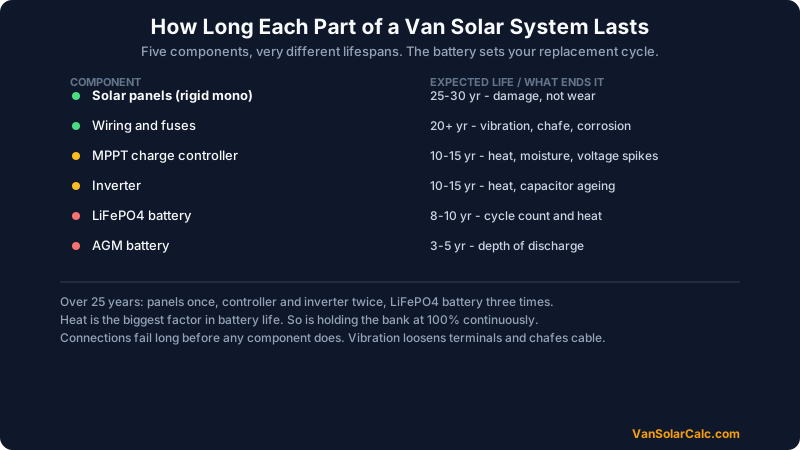
A van solar system is not one product with one lifespan. It is five components that wear out at very different rates, and knowing which one dies first changes how you budget for it.
The short version: the panels will almost certainly outlast the van. The battery will not.
Lifespan by component
| Component | Expected life | What actually ends it |
|---|---|---|
| Solar panels | 25–30 years | Physical damage, not wear |
| MPPT charge controller | 10–15 years | Heat, moisture, voltage spikes |
| Inverter | 10–15 years | Heat and capacitor ageing |
| LiFePO4 battery | 8–10 years | Cycle count and heat |
| AGM battery | 3–5 years | Depth of discharge |
| Wiring and fuses | 20+ years | Vibration, corrosion, chafe |
Panels: 25 to 30 years
Quality monocrystalline panels are warranted for 25 to 30 years and degrade under one percent a year. After a decade a good panel is still producing roughly 90 percent of its original output.
In practice panels rarely die of old age on a van. They die from a branch, a failed bracket at highway speed, or a cracked cell from flexing. Flexible panels are the exception, often carrying five-year warranties and a shorter real life, particularly bonded flat to a hot roof. See monocrystalline vs polycrystalline vs flexible.
Budget implication: buy panels once.
Charge controller and inverter: 10 to 15 years
Both are power electronics, and both are killed by the same things: heat, moisture, and voltage they were not designed for.
MPPT controllers typically last 10 to 15 years and generally outlast PWM units. The most common premature failure is not wear at all, it is a string that exceeds the controller's maximum input voltage on a cold morning. That is a design error, and it is covered in solar panel specs explained.
Mount both somewhere ventilated and dry. A controller in a sealed cabinet next to a heater runs hot for its whole life and will not reach the top of its range.
Battery: the one that sets your replacement cycle
LiFePO4 typically lasts 8 to 10 years, with light cycling and good temperature control extending that considerably. AGM manages 3 to 5.
Cycle count matters more than calendar age for a full-timer. A bank cycled daily accumulates cycles quickly, while a weekend van may age out before it cycles out.
Three things shorten it:
- Heat. The single biggest factor. A battery living at 35 °C ages far faster than one at 20 °C.
- Sitting at 100 percent. Holding a lithium bank at full charge is stressful. This is why float voltage matters. See LiFePO4 charge settings.
- Deep discharge, on AGM particularly. Taking AGM below 50 percent regularly collapses its life.
More detail in how long do LiFePO4 batteries last.
Wiring: outlives everything, if installed properly
Correctly sized, protected cable lasts decades. What kills van wiring is not age but movement: chafe where cable crosses metal without a grommet, connections loosened by vibration, and corrosion where water reaches a terminal.
This is why connections, not components, are the most common fault in van solar. See solar panels not charging the battery.
What this means for budgeting
Over 25 years of ownership you would expect to buy:
- Panels: once
- Controller and inverter: twice
- LiFePO4 battery: three times
- Wiring: once, if done properly
The battery is the recurring cost, which is worth factoring into any payback calculation. The first-fit costs are in van electrical system cost and the return in is van solar worth it.
It also argues for spending on quality where replacement is disruptive. A controller buried behind cabinetry is worth buying well; a battery in an accessible location is easier to live with when it needs replacing.
Getting the full life out of it
Keep the battery cool and out of direct sun. Ventilate the controller and inverter. Check bracket bolts and roof sealant twice a year. Do not hold the bank at 100 percent continuously. The full routine is in cleaning and maintaining van solar panels.
To size a system correctly in the first place, which matters because a chronically undersized bank gets cycled harder and ages faster, use the van solar calculator.
FAQ
How long does a van solar system last?
The components differ widely. Panels last 25 to 30 years, the charge controller and inverter 10 to 15, and a LiFePO4 battery 8 to 10, while AGM manages 3 to 5. Properly installed wiring outlasts all of it. The battery is the component that sets your replacement cycle.
How long do solar panels last on a camper van?
Quality rigid monocrystalline panels are warranted 25 to 30 years and degrade under one percent a year, so they usually outlast the van. Flexible panels are the exception, often warranted for around five years and shorter-lived in practice because they mount flat against a hot roof.
How often do van batteries need replacing?
A LiFePO4 bank typically lasts 8 to 10 years, so a long-term owner should expect to replace it two or three times over the life of the panels. AGM lasts 3 to 5 years. Heat and being held at full charge are the two factors that shorten lithium life most.
What fails first in a van solar system?
Connections, long before any component. Vibration loosens terminals and chafes cable, and corrosion reaches poorly sealed joints. Of the actual components, the battery has the shortest life, followed by the charge controller and inverter at 10 to 15 years.