Solar vs Alternator vs Shore Power for a Van
By Frank Zale · October 1, 2026 · 4 min read
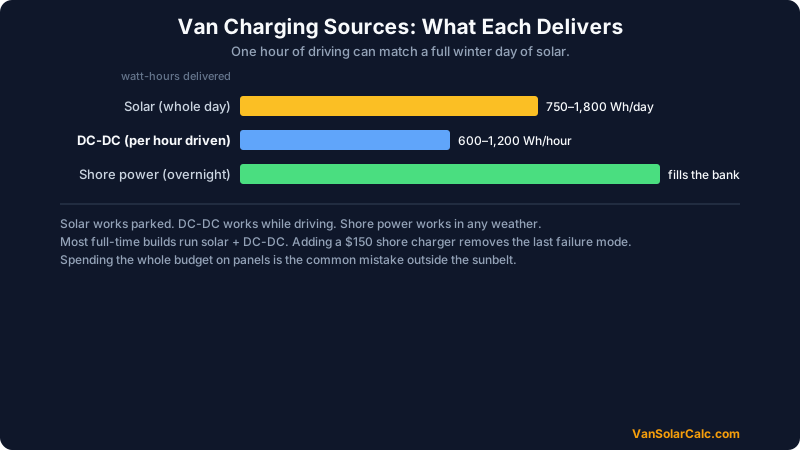
Every van has three possible ways to fill its battery: the sun, the engine, and a plug. Most builds use two. The best builds choose deliberately rather than defaulting to solar because that is what everyone talks about.
Here is what each one actually delivers.
What each source gives you
| Solar | Alternator (DC-DC) | Shore power | |
|---|---|---|---|
| Typical output | 750–1,800 Wh/day | 600–1,200 Wh/hour | Limited by charger |
| Cost | $800–1,200 | $200–400 | $150–300 |
| Works when | Sun is up | Engine is running | Plugged in |
| Weather dependent | Completely | No | No |
| Ongoing cost | None | Fuel (marginal) | $3–5/night |
| Roof space needed | Yes, a lot | None | None |
The striking line is output. A 30 A DC-DC charger delivers roughly 400 W continuously, so one hour of driving can match a full winter day of solar.
Solar: best for staying put
Solar is the only source that works while you are parked and doing nothing, which is exactly the use case most people buy a van for.
Strengths: silent, no moving parts, no fuel, works every day the sun shines, and enables genuinely remote camping.
Weaknesses: output collapses in winter and under cloud, needs roof space you may not have, and the array size is capped by the vehicle.
Best for: people who park for days at a time, travel in sunny regions, or want independence from campsites.
Alternator charging: best for movers
A DC-DC charger takes power from the vehicle's alternator while you drive and charges the house bank properly, with the right voltage profile for your chemistry.
Strengths: high output, completely weather independent, cheap relative to what it delivers, and it works in the exact conditions where solar fails, which is winter and heavy cloud.
Weaknesses: only works while driving, so a week parked in one spot contributes nothing. It also needs correct sizing against your alternator, since a large charger on a small alternator is a real risk.
Best for: anyone who drives most days, and essentially mandatory for northern winter travel. See charging a van battery while driving and battery isolator vs DC-DC charger.
Shore power: the cheap backstop
A mains charger is the least glamorous option and often the best value per dollar.
Strengths: cheapest hardware, fully charges a bank overnight regardless of weather, and useful for equalising and for maintenance charging during storage.
Weaknesses: requires a powered site, which costs money and constrains where you stay.
Best for: a backup that costs little to fit, and the honest answer for deep winter in low-sun regions where the panels needed to avoid hookups would not fit on the roof. See shore power for camper vans.
What to build
Solar plus shore power suits weekend and fair-weather travel. Cheap, simple, covers the normal case.
Solar plus DC-DC is the standard full-time combination and the one most builds converge on. Solar carries the parked days, the alternator carries the winter and the cloudy weeks.
All three is the right answer for genuine year-round full-time travel in varied climates. The shore charger costs little and removes the last failure mode.
The common mistake is spending the whole budget on panels. If you are choosing between another 200 W of array and a DC-DC charger, the charger usually delivers more real energy over a year, particularly outside the sunbelt. The seasonal figures are in peak sun hours by state.
Whichever combination you pick, size the battery first, since all three fill the same bank. See what size battery do I need for a camper van, or run the whole system through the van solar calculator.
FAQ
What is the best way to charge a van battery?
There is no single best source, because each covers a different situation. Solar charges while you are parked, a DC-DC charger delivers far more energy but only while driving, and shore power fully charges overnight regardless of weather. Most full-time builds run solar plus a DC-DC charger, with a shore charger as a cheap backup.
Is a DC-DC charger better than solar?
It delivers more energy per hour, roughly 600 to 1,200 Wh against 750 to 1,800 Wh for a whole day of solar, and it works in any weather. But it only charges while the engine runs, so it is a complement to solar rather than a replacement. If you park for days at a time, solar is what keeps the bank up.
Can I use solar and a DC-DC charger at the same time?
Yes, and it is the standard arrangement in full-time builds. Both feed the same battery bank and modern equipment handles simultaneous charging without conflict. Make sure both are configured for your battery chemistry so they are not fighting each other with different voltage targets.
Do I still need shore power if I have solar?
Not strictly, but it is inexpensive insurance. A mains charger costs $150 to $300 and fully recharges the bank overnight in weather where solar produces almost nothing. For anyone travelling in northern winters it is usually cheaper than the extra panels that would be needed to avoid hookups.