Van Electrical System Cost: Complete 2026 Budget Breakdown
By Frank Zale · July 14, 2026 · 4 min read
A van electrical system costs between $1,200 and $8,000+ depending on how you camp. Weekenders get away with $1,200–1,800. Part-timers who work from the road land around $2,500–4,000. Full-time builds with big battery banks and electric cooking run $5,000–8,000 or more. Here's the line-by-line breakdown so you can budget your build honestly, and see where it's safe to save.
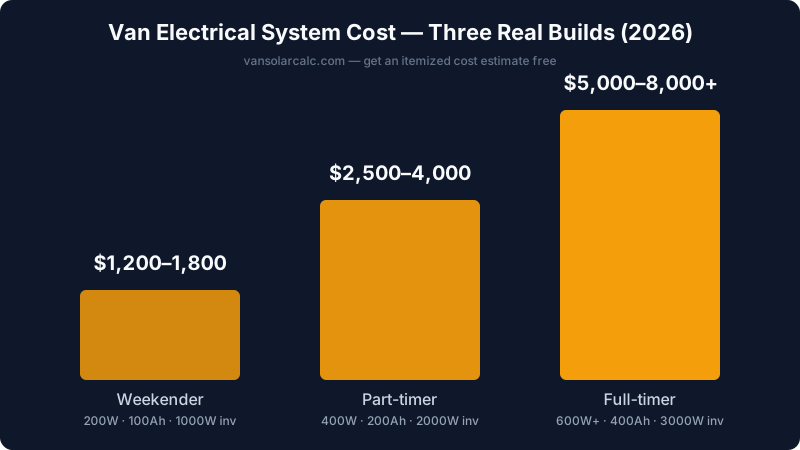
The three builds, itemized
Prices are typical 2026 street prices for reputable brands (Renogy/Rich Solar tier through Victron/Battle Born tier).
Weekender build — $1,200–1,800
Fridge, fan, lights, phones. Two to three nights out.
| Component | Spec | Cost |
|---|---|---|
| Solar panels | 200W | $150–250 |
| Battery | 100Ah LiFePO4 | $250–450 |
| MPPT charge controller | 20A | $90–180 |
| Inverter | 1,000W pure sine | $150–250 |
| Wire, fuses, breakers, lugs | — | $200–300 |
| Mounts, glands, connectors | — | $80–150 |
| Battery monitor (shunt) | — | $80–150 |
| DC fuse block + switches | — | $60–120 |
Part-timer build — $2,500–4,000
Adds remote work: laptop, Starlink, more battery buffer.
| Component | Spec | Cost |
|---|---|---|
| Solar panels | 400W | $280–500 |
| Battery | 200Ah LiFePO4 | $500–900 |
| MPPT charge controller | 40A | $150–300 |
| Inverter | 2,000W pure sine | $300–500 |
| DC-DC alternator charger | 30A | $200–300 |
| Wire, fuses, distribution | — | $350–500 |
| Mounts and hardware | — | $120–200 |
| Monitoring | Bluetooth shunt | $130–200 |
Full-timer build — $5,000–8,000+
Live-aboard: induction cooking, big autonomy, winter capability.
| Component | Spec | Cost |
|---|---|---|
| Solar panels | 600W+ | $450–800 |
| Battery | 400Ah LiFePO4 | $1,200–2,600 |
| MPPT charge controller | 50–60A | $250–450 |
| Inverter/charger | 3,000W with shore power | $700–1,400 |
| DC-DC alternator charger | 50A | $280–400 |
| Wire, fusing, bus bars, distribution | — | $500–800 |
| Mounts, roof work, pass-throughs | — | $200–350 |
| Monitoring system | Full shunt + display | $200–400 |
Where the money actually goes
Two lines dominate every budget: the battery (30–40% of the total) and the inverter (10–20%). Everything else is small by comparison, which tells you where to focus your research. Start with the LiFePO4 vs AGM decision and the inverter sizing guide.
The line everyone underestimates: wire, fuses, and distribution. Budget $200–800. Marine-grade tinned copper in the right gauge is not the place to economize — undersized cable is a fire risk, not a savings. The wire and fuse sizing guide explains what "the right gauge" means.
Where it's safe to save (and where it isn't)
Safe to save:
- Panels — commodity hardware; budget brands perform within a few percent of premium.
- Mounts and hardware — generic Z-brackets and glands work fine.
- Batteries with good reviews over famous names — several mid-tier LiFePO4 brands use the same cells as premium labels. Look for a real BMS spec and a usable warranty.
Never save on:
- Wire gauge and fuses — undersized copper heats up; a missing fuse is how vans burn.
- Inverter quality — cheap modified-sine units damage electronics and waste power idling.
- Crimps and terminations — a $30 proper crimper outperforms pliers forever. Loose connections are the #1 cause of mystery failures (see our troubleshooting post).
DIY vs professional installation
Labor for a professional van electrical install runs $1,500–4,000 on top of parts. A careful first-timer can absolutely DIY this — the system is conceptually simple: panels → controller → battery → loads. The skills are crimping, torquing, and following a wiring diagram.
DIY one thing at a time, test as you go, and have your plan checked before you energize it. Start with a parts list you trust: the free calculator produces one from your actual appliance list, with wire gauges and fuse sizes included.
FAQ
How much does a van solar setup cost in total?
Parts: $1,200–1,800 for a weekend system, $2,500–4,000 for remote work, $5,000+ for full-time with electric cooking. Add $1,500–4,000 if a shop installs it.
Is a van electrical system worth it compared to a generator?
A $500 generator is cheaper upfront but needs fuel, maintenance, and somewhere to run without annoying everyone. Solar is silent, free after purchase, and works while you sleep. Most van lifers run solar primary with the alternator (DC-DC) as bad-weather backup.
What's the single best value upgrade?
A DC-DC alternator charger (~$250). It turns every hour of driving into 350–600 Wh of charge regardless of weather — the cheapest insurance against cloudy weeks.
Can I build the system in stages?
Yes, and you should. Battery + DC-DC charger + fridge first; solar next; inverter and bigger loads last. Buy the wire and distribution sized for the final system so you never re-do copper. The pre-purchase checklist sequences it properly.