Battery Isolator vs DC-DC Charger: What's the Difference?
By Frank Zale · August 28, 2026 · 2 min read
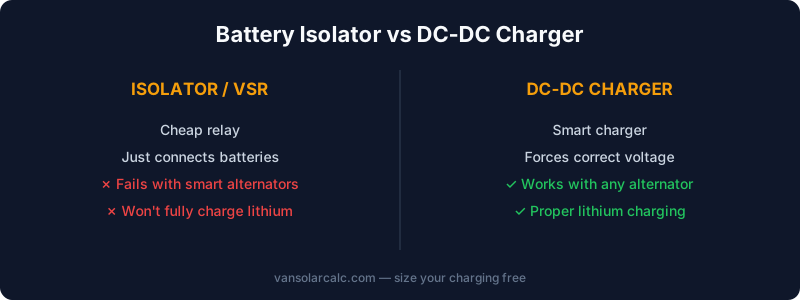
Both a battery isolator and a DC-DC charger let your engine charge your house battery while driving, but they work very differently. For any modern van, the DC-DC charger wins. Here's the difference in plain terms.
The short version
- Battery isolator (VSR): a simple relay that connects your two batteries when the engine runs. Cheap, but dumb.
- DC-DC charger: an electronic charger that takes engine power and forces the correct charging voltage. Smarter, and lithium-friendly.
Why the isolator falls short
A VSR just links the batteries and hopes the alternator's voltage is high enough. Two problems:
- Smart alternators (most vans since ~2015) drop their voltage to save fuel once the starter battery is full, so the isolator passes too little to charge your house battery.
- Lithium batteries want a specific charge profile a plain relay can't provide, so they never fully charge.
Why the DC-DC charger wins
- Forces the correct voltage no matter what the alternator does
- Charges LiFePO4 properly with the right profile
- Protects your starter battery from being drained
- Often combines with a solar input so one unit handles both
It's the reliable modern choice — more in charging while driving.
When an isolator is still okay
- Older vehicle with a traditional (non-smart) alternator
- Lead-acid/AGM house battery
- Tightest budget and light use
If that's you, a VSR can work. Everyone else should budget for a DC-DC charger.
Which size?
Match the DC-DC charger to your alternator (a 30A unit suits most vans; 40–50A for big battery banks). Plan the whole charging setup with the free calculator.
FAQ
What's the difference between a battery isolator and a DC-DC charger?
An isolator is a simple relay that just connects the batteries. A DC-DC charger is a smart charger that forces the correct voltage — essential for smart alternators and lithium batteries.
Do I need a DC-DC charger for a lithium battery?
Effectively yes. A plain isolator won't charge LiFePO4 correctly, and modern smart alternators make it worse. A DC-DC charger ensures a proper full charge.
Can I use a battery isolator with a smart alternator?
Usually not well — smart alternators lower their voltage, so an isolator passes too little to charge the house battery. Use a DC-DC charger instead.