Van Appliance Power Consumption Chart (12V)
By Frank Zale · September 17, 2026 · 5 min read
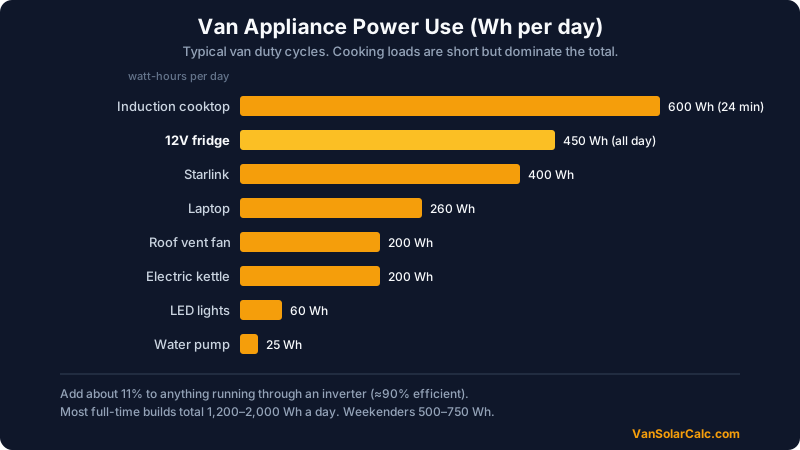
Every van power calculation starts with the same step: a list of what you run and for how long. This is that list, with realistic wattages rather than the optimistic figures on packaging.
Use it as a starting point, then measure your own gear once the build is running.
12V appliance power consumption chart
Watt-hours per day assume typical van use. Amp-hours are at 12V.
| Appliance | Watts | Typical hours/day | Wh/day | Ah/day at 12V |
|---|---|---|---|---|
| Essentials | ||||
| 12V compressor fridge | 45 W | 10 (cycling) | 450 | 37.5 |
| Roof vent fan | 25 W | 8 | 200 | 16.7 |
| LED lights | 15 W | 4 | 60 | 5.0 |
| Water pump | 50 W | 0.5 | 25 | 2.1 |
| Electronics | ||||
| Laptop | 65 W | 4 | 260 | 21.7 |
| Starlink (Standard) | 50 W | 8 | 400 | 33.3 |
| WiFi router / booster | 10 W | 12 | 120 | 10.0 |
| Phone charging | 10 W | 3 | 30 | 2.5 |
| TV / monitor | 40 W | 2 | 80 | 6.7 |
| Camera / drone charging | 30 W | 1 | 30 | 2.5 |
| CPAP (no humidifier) | 40 W | 8 | 320 | 26.7 |
| Climate | ||||
| Diesel heater (running avg) | 30 W | 4 | 120 | 10.0 |
| Electric blanket | 55 W | 3 | 165 | 13.8 |
| 12V heated mattress pad | 45 W | 4 | 180 | 15.0 |
| Cooking (via inverter) | ||||
| Induction cooktop | 1500 W | 0.4 | 600 | 50.0 |
| Electric kettle | 1000 W | 0.2 | 200 | 16.7 |
| Microwave | 900 W | 0.2 | 180 | 15.0 |
| Instant Pot | 900 W | 0.5 | 450 | 37.5 |
| Coffee maker | 800 W | 0.2 | 160 | 13.3 |
Reading the chart properly
The fridge figure is a cycling average. The compressor draws about 4 A when running but cycles roughly 35 percent of the time in mild weather, which is where 450 Wh comes from. In summer heat this can rise by half again. See 12V fridge power consumption.
Cooking loads are short but brutal. An induction hob at 1500 W for 24 minutes uses 600 Wh, more than a fridge does all day. Cooking is what pushes a van from a small system to a large one, and it drives inverter size too.
Add the inverter penalty. Everything in the cooking section runs through an inverter at roughly 90 percent efficiency, so the real draw is about 11 percent higher than the table shows. A 600 Wh induction session costs about 667 Wh from the battery.
Standby loads add up. An inverter left switched on can idle at 5 to 25 W around the clock. At 20 W that is 480 Wh a day, more than most vans spend on lighting and water combined.
Three worked profiles
| Profile | Typical loads | Daily total |
|---|---|---|
| Weekender | Fridge, fan, lights, phones | 500–750 Wh |
| Full-time, no cooking | Above plus laptop, Starlink, router | 1,200–1,500 Wh |
| Remote worker with induction | Above plus induction and kettle | 2,000–2,600 Wh |
Most full-time builds land between 1,200 and 2,000 Wh a day.
From this chart to a system
Once you have your daily total:
- Array size = daily Wh ÷ (peak sun hours × 0.75). Figures by state are in peak sun hours by state.
- Battery size = (daily Wh × days of reserve) ÷ (12 × 0.8). See what size battery do I need.
- Inverter size comes from your largest simultaneous load, not the daily total. See what size inverter do I need.
The van solar calculator does all three from this same appliance list, and also sizes the charge controller, cable and fuses.
FAQ
How much power does a camper van use per day?
Most full-time van builds use between 1,200 and 2,000 Wh a day, or roughly 100 to 165 Ah at 12V. Weekend setups running just a fridge, fan and lights use 500 to 750 Wh, while builds with induction cooking and a remote-work setup can reach 2,600 Wh.
What uses the most power in a van?
The fridge is the largest continuous load, typically 400 to 600 Wh a day, because it runs around the clock. Cooking appliances draw far more instantaneously, with an induction hob using 600 Wh in under half an hour, so a van that cooks electrically will have cooking as its single biggest daily line item.
How many amps does a van use per day?
Divide daily watt-hours by 12 for a 12V system. A typical full-time build using 1,500 Wh a day draws about 125 Ah. This is the figure to size a battery bank against, remembering that only 80 percent of a LiFePO4 bank is usable.
Do I need to add anything to these figures?
Two things. Add about 11 percent to any appliance running through an inverter, since inverters are roughly 90 percent efficient. Then add your inverter's idle draw if you leave it switched on, which can be 5 to 25 W continuously.