Heated LiFePO4 Batteries: Do You Need One?
By Frank Zale · September 3, 2026 · 4 min read
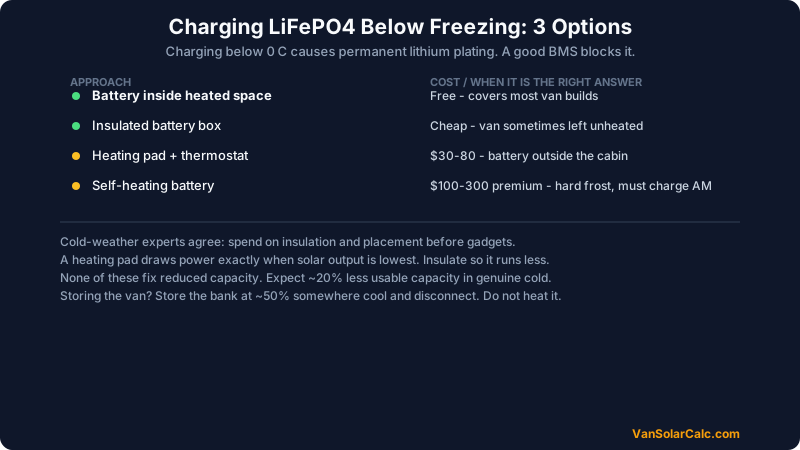
LiFePO4 cannot be charged below freezing. Do it anyway and you plate lithium onto the anode, which is permanent damage rather than a temporary loss of performance. Every quality battery has a BMS that refuses charge below 0 °C for exactly this reason.
That leaves winter travellers with a problem, and three ways to solve it. Only one of them is a gadget.
The three options
| Approach | Cost | Works when | Draws power |
|---|---|---|---|
| Put the battery in heated space | Free | Cabin stays above freezing | No |
| Heating pad + insulation | $30–80 | Battery is outside the cabin | Yes, while heating |
| Self-heating battery | $100–300 premium | Anywhere, automatic | Yes, while heating |
Option 1: put the battery inside, and stop there
This is the answer most van builds already have and do not realise.
A battery under a bed platform, inside the insulated envelope, sits close to cabin temperature. If you are living in the van, running a heater and generating body heat, the interior rarely approaches freezing even when it is well below outside. A standard LiFePO4 with a competent BMS handles that without any special feature.
Cold-weather experts consistently make the same point: spend on insulation and placement before gadgets. A battery in a well-insulated box inside the living space solves the problem for nothing.
Where this fails: batteries mounted underslung beneath the chassis, in an uninsulated garage or gear locker, or in a van left unheated while you are away.
Option 2: a heating pad
An adhesive heating pad under or around the battery, usually thermostatically controlled, switched on when temperature approaches freezing.
Pads originally made for RV water tanks work well here and are inexpensive. Combined with an insulated battery box they hold a battery above freezing on genuinely cold nights.
The catch is where the power comes from. A pad draws real current, and it draws it in exactly the conditions where your solar is producing least. Heating a battery through a long northern winter night costs energy you may not be able to replace the next day, which is the same arithmetic covered in peak sun hours by state.
Use a thermostat so it only runs when needed, and insulate properly so it runs as little as possible.
Option 3: a self-heating battery
Self-heating LiFePO4 has a heating film and control built into the BMS. When it detects a charge attempt below freezing, it heats the cells first, then accepts charge automatically.
Advantages: entirely automatic, nothing extra to wire, no separate thermostat, and it draws heating power from the incoming charge rather than from the bank.
Disadvantages: you pay a premium for it, and it only solves charging. A cold battery still delivers reduced capacity when discharging, which no heating system fixes instantly.
Which one you actually need
Battery inside a heated van, cabin stays above freezing: none of this. Standard LiFePO4 is fine. This covers most builds.
Battery inside, but the van is sometimes left unheated: insulate the battery box. Consider a pad if you regularly leave the van in hard frost.
Battery outside the heated envelope, or you camp in serious cold and must recharge in the morning: self-heating is worth the premium. The automation matters when the alternative is discovering at 8 am that your BMS will not accept charge.
Storing the van over winter: none of the above. Store the bank at about half charge somewhere cool and disconnect it. Heating an unused battery is wasted energy. See how to winterize your van solar system.
What none of them fix
Cold reduces usable capacity even when charging is not the issue. Plan for roughly 20 percent less usable capacity in genuine cold, which is why winter builds look oversized on paper. The derate is built into what size battery do I need for a camper van.
Discharging below freezing is generally fine, incidentally. It is only charging that causes permanent damage. The mechanism is explained in charging LiFePO4 in cold weather.
FAQ
Do I need a self-heating LiFePO4 battery for van life?
Only if the battery lives outside your heated space, or you camp in hard frost and need to recharge in the morning. A battery inside an insulated van that you are living in rarely approaches freezing, and a standard LiFePO4 with a normal BMS handles that without a heating feature.
Can you charge LiFePO4 below freezing?
No. Charging below 0 °C causes lithium plating on the anode, which is permanent damage rather than a temporary reduction in performance. A quality BMS blocks charging below freezing automatically. Discharging in the cold is generally acceptable, though usable capacity falls.
Is a battery heating pad worth it?
It is a cheap and effective option when the battery sits outside your heated space, particularly combined with an insulated box. The drawback is that it consumes power exactly when solar output is lowest, so use a thermostat and insulate well so it runs as little as possible.
Does cold weather reduce battery capacity?
Yes. Expect roughly 20 percent less usable capacity in genuine cold, regardless of whether the battery is heated. Heating solves the charging restriction, not the capacity reduction, so winter builds need a larger bank than the same build used in summer.