How Much Solar Does an RV Need? (Class A, B & C)
By Frank Zale · August 4, 2026 · 5 min read
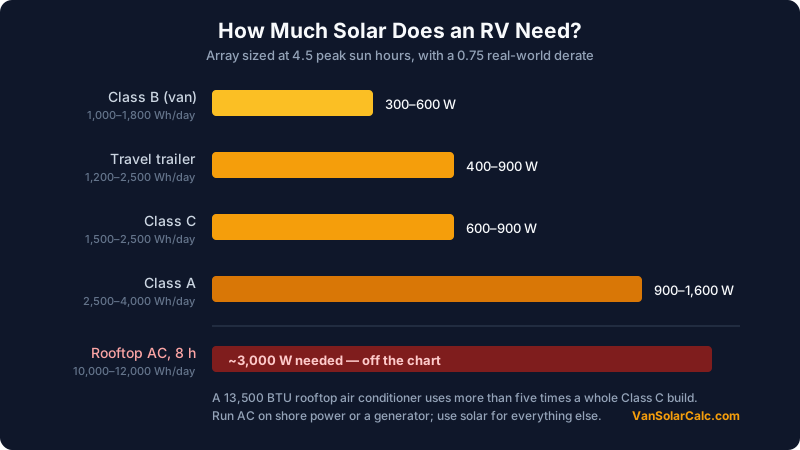
RV solar sizing follows the same arithmetic as a van, but the numbers land in a different place. RVs carry bigger fridges, more lights, sometimes a residential refrigerator, and often a roof air conditioner. They also have roof space a van builder would envy, and most already have shore power and a converter fitted from the factory.
This guide works through what each class actually needs.
Start with your daily watt-hours
Every correct answer starts here. List each device, its watts, and hours of use per day. A representative Class C without air conditioning:
| Device | Watts | Hours/day | Wh/day |
|---|---|---|---|
| Residential fridge | 120 | 8 | 960 |
| LED lighting | 40 | 5 | 200 |
| Water pump | 60 | 1 | 60 |
| TV | 70 | 3 | 210 |
| Laptop + phones | 90 | 4 | 360 |
| Vent fans | 30 | 6 | 180 |
| Total | 1,970 Wh |
That is roughly double a typical van. The fridge alone is most of it.
Then size the array:
Panel watts = daily Wh ÷ (peak sun hours × 0.75)
At 4.5 peak sun hours: 1,970 ÷ (4.5 × 0.75) = 584 W. Call it 600 W.
The 0.75 is a real-world derate covering wiring loss, controller efficiency, heat, and imperfect panel angle. Anything on an inverter costs about 10% more than its label, because inverters run near 90% efficiency.
Typical figures by class
| RV class | Roof space | Daily load | Array | Battery (LiFePO4) |
|---|---|---|---|---|
| Class B (van) | 40–70 sq ft | 1,000–1,800 Wh | 300–600 W | 200–300 Ah |
| Class C | 90–160 sq ft | 1,500–2,500 Wh | 600–900 W | 300–400 Ah |
| Class A | 150–300 sq ft | 2,500–4,000 Wh | 900–1,600 W | 400–600 Ah |
| Travel trailer | 80–200 sq ft | 1,200–2,500 Wh | 400–900 W | 200–400 Ah |
Class A owners are usually surprised twice: first that they need so much, then that their roof easily holds it. Slide-out mechanisms, vents, and existing AC units are what actually eat the space.
The air conditioning question
This is where most RV solar plans meet reality. A 13,500 BTU rooftop air conditioner draws roughly 1,200–1,500 W while running. Run it eight hours and you have used 10,000–12,000 Wh — more than five times the entire load in the table above.
Covering that from solar alone would need somewhere near 3,000 W of panels and a 1,000 Ah battery bank. That is not a realistic rooftop install on most RVs.
Practical options instead:
- Run air conditioning on shore power or a generator, and use solar for everything else.
- Fit a small 12V DC air conditioner, which draws far less than a rooftop unit.
- Use roof vent fans, reflective window covers, and shade, which handle most situations for a fraction of the energy.
Our post on running air conditioning from van solar works through the full math.
What RVs have that vans do not
Shore power and a converter. Most RVs already include a converter/charger that runs the 12V system and charges the house battery from shore power. Solar supplements it rather than replacing it.
A residential fridge, sometimes. Absorption fridges run on propane and use very little electricity. Residential compressor fridges are more efficient per unit of cooling but need continuous power, which changes the battery calculation more than the panel calculation.
More battery room. Weight and space are far less constrained than in a van, which is why 400–600 Ah banks are common in Class A coaches.
Existing 12V wiring. Usually undersized for a large solar install. Check gauge before assuming you can reuse it — our wire sizing method covers how.
Batteries matter as much as panels
Panels only produce in daylight. The battery carries you overnight and through cloudy days.
Battery Ah = (daily Wh × days of autonomy) ÷ (system volts × depth of discharge)
Use 0.8 depth of discharge for LiFePO4 and 0.5 for lead-acid or AGM. For 1,970 Wh a day, two days of autonomy, at 12V on LiFePO4: (1,970 × 2) ÷ (12 × 0.8) = 410 Ah.
The same requirement on AGM would need 656 Ah, and roughly three times the weight. On an RV with weight capacity to spare that is survivable, but it is why lithium dominates new installs.
Winter and location
Peak sun hours change everything. Arizona averages about 6.5 annually and 4.8 in winter. The Pacific Northwest is about 3.8 and 1.5. The same 1,970 Wh load needs 584 W in Arizona and 1,750 W in a PNW December.
If you chase warm weather, size on the annual figure. If you stay north through winter, size on the winter figure or plan on shore power. Our location pages list real numbers by region.
FAQ
How many solar panels does an RV need?
Most RVs need 600–1,200 W, which is three to six standard panels. A Class C at roughly 2,000 Wh a day needs about 600 W at 4.5 peak sun hours. Class A coaches with larger loads commonly run 1,000 W or more.
Can solar run an RV air conditioner?
Not realistically from a rooftop array. A 13,500 BTU unit uses 10,000–12,000 Wh over eight hours, which would need around 3,000 W of panels and a very large battery bank. Most owners run AC on shore power or a generator and use solar for everything else.
Is 400 watts of solar enough for an RV?
It covers a modest setup (fridge, lights, water pump, and device charging) for weekend and part-time use. Full-time living, a residential fridge, or winter travel generally needs 600 W or more.
How much battery do I need with RV solar?
Take your daily watt-hours, multiply by days of autonomy, and divide by system voltage times depth of discharge (0.8 for LiFePO4). A 2,000 Wh daily load with two days of backup needs about 410 Ah at 12V.
Work out your own numbers with the free solar calculator — it sizes panels, battery, controller, wiring, and fuses, and estimates cost.