What Gauge Wire for Solar Panels on a Van?
By Frank Zale · August 27, 2026 · 2 min read
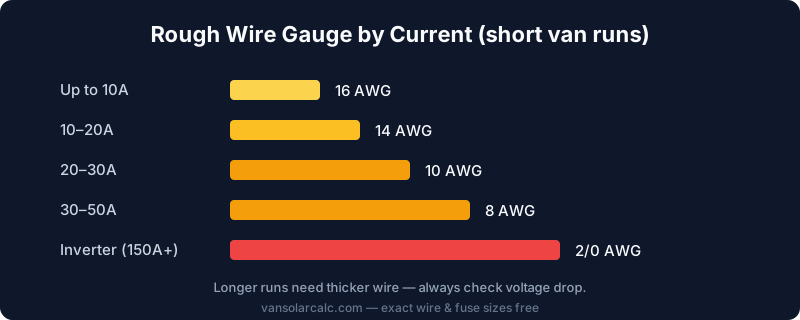
Wrong wire gauge is one of the most common, and most dangerous, van solar mistakes. Too thin and it overheats and wastes power. The rule: thicker wire for more current and longer runs. Here's a quick guide, then how to get it exactly right.
Quick gauge guide (short runs)
| Current | Rough gauge |
|---|---|
| Up to 10A | 16 AWG |
| 10–20A | 14 AWG |
| 20–30A | 10 AWG |
| 30–50A | 8 AWG |
| Inverter (150A+) | 2/0 AWG |
These are starting points for short runs. Two things push you thicker.
What decides wire size
- Current (amps). More amps = thicker wire. Get amps from watts ÷ volts.
- Length. The longer the run, the more voltage you lose. Long panel-to-controller runs often need a step or two thicker.
Losing more than 3% voltage in a run means the wire is too thin. That lost voltage becomes heat.
Panel wire vs battery wire
- Panel-to-controller: usually 10–12 AWG for a typical array, but wiring panels in series raises voltage and lets you use thinner wire.
- Controller-to-battery and battery-to-inverter: the heavy hitters. The inverter cable is the thickest wire in the van.
Use marine-grade tinned copper
In a damp, vibrating van, use tinned copper wire — it resists corrosion far better than plain copper. This is not the place to save a few dollars.
Get the exact number
Guessing wire gauge is risky. The wire gauge calculator gives the precise size for your current and run length, and the full calculator outputs every wire and fuse in your build. The concepts are in the wire & fuse guide.
FAQ
What gauge wire do I need for solar panels on a van?
For a typical array, 10–12 AWG from panels to controller on short runs, but it depends on your current and run length. Long runs need thicker wire to avoid voltage drop.
What happens if my wire is too thin?
It overheats, wastes power as heat, and becomes a fire risk. Undersized wire is one of the most dangerous van electrical mistakes.
Should I use household wire in my van?
No — use marine-grade tinned copper. It resists the corrosion and vibration a van subjects wiring to, unlike solid household wire.